Nafeesa parveen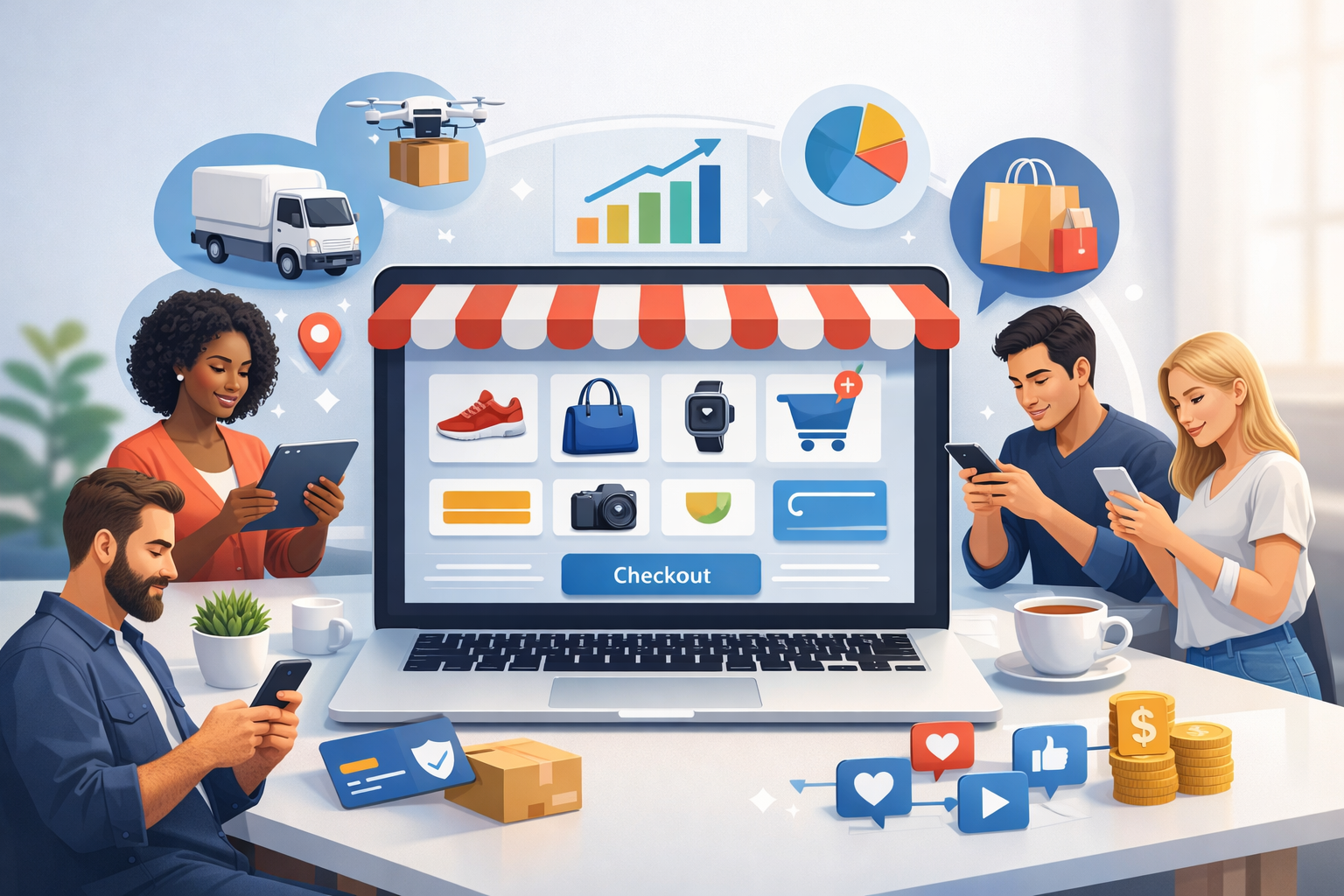
A digital illustration representing an e-commerce business in 2026, featuring online shopping, payment gateways, shipping icons, and customers using laptops and smartphones.
What Is an E-commerce Business
The term e-commerce is short for “electronic commerce.” It refers to the buying and selling of goods or services through online platforms. Unlike traditional retail, e-commerce allows businesses to reach a global audience without the limitations of physical stores.
In 2026, e-commerce continues to grow exponentially. With the rise of mobile shopping, digital wallets, AI-powered personalization, and social commerce, more entrepreneurs are exploring online business opportunities than ever before.
Why E-commerce?
- Global reach: Sell to customers worldwide.
- Lower startup costs: No need for a physical store.
- Convenience: Operate 24/7.
- Scalability: Easily grow your business online.
What Is an E-commerce Business?
An e-commerce business is any company or individual that sells products or services over the internet. It can be a small home-based store, a dropshipping business, or a large marketplace like Amazon or Flipkart.
Key Characteristics:
- Digital storefront: The business operates online.
- Transactions are digital: Payments via credit cards, UPI, PayPal, etc.
- Logistics integration: Products are shipped to customers efficiently.
- Customer engagement: Uses digital marketing, social media, and email campaigns to attract buyers.
In simple words, if your business exists online and sells something to people digitally, it’s an e-commerce business.
How e-commerce business Works
Understanding the workflow of an e-commerce business is essential for beginners. Here’s the basic process:
- Customer visits online store – A potential buyer browses your website or app.
- Product selection – The customer adds products to the shopping cart.
- Payment – Secure online payment through credit/debit cards, UPI, wallets, or net banking.
- Order processing – The seller receives the order and prepares it for shipping.
- Shipping and delivery – Products are shipped using courier services.
- Post-sales support – Returns, exchanges, or support are provided to enhance customer satisfaction.
E-commerce integrates multiple technologies: website builders, payment gateways, logistics solutions, and marketing tools.
Types of E-commerce Business Models
E-commerce businesses are categorized into several types. Understanding which model suits your business is crucial.
1. B2B (Business-to-Business)
- Involves transactions between businesses.
- Example: Alibaba – companies sell products in bulk to retailers.
2. B2C (Business-to-Consumer)
- Most common type. Businesses sell directly to consumers.
- Example: Amazon, Flipkart, Myntra.
3. C2C (Consumer-to-Consumer)
- Individuals sell products or services to other individuals.
- Example: eBay, OLX, Meesho.
4. C2B (Consumer-to-Business)
- Individuals sell products or services to businesses.
- Example: Freelance platforms like Upwork or content creation.
5. D2C (Direct-to-Consumer)
- Brands sell directly to consumers without middlemen.
- Example: Gymshark, Mamaearth.
Popular e-commerce business Platforms in 2026
Choosing the right platform is critical for your success. Some popular options:
| Platform | Best For | Features |
|---|---|---|
| Shopify | Beginners & SMEs | Easy setup, multiple payment gateways |
| WooCommerce | WordPress users | Open-source, highly customizable |
| Amazon | Global reach | Marketplace, huge audience |
| Meesho | Reselling & small sellers | Social commerce, minimal investment |
| BigCommerce | Growing businesses | Advanced SEO, scalability |
Benefits of e-commerce business
- Lower operational costs – No physical store rent or utilities.
- Global reach – Sell to customers worldwide.
- Data-driven insights – Track customer behavior and improve sales.
- Convenience – Customers can shop anytime, anywhere.
- Scalability – Easily expand product lines or target new markets.
- Personalization – AI tools help tailor recommendations to buyers.
Challenges of Running an E-commerce Business
No business is without challenges. Common e-commerce hurdles:
- High competition – Millions of online stores compete for attention.
- Customer trust – Need strong reviews and secure payments.
- Logistics & delivery – Efficient shipping is critical for customer satisfaction.
- Marketing costs – Paid ads, SEO, and influencer marketing can be expensive.
- Website issues – Downtime, slow speed, or poor UX affects sales.
How to Start an E-commerce Business Step by Step
Step 1: Choose Your Niche
Focus on a product category you are passionate about or has market demand. Examples: fashion, tech gadgets, home essentials.
Step 2: Research Your Audience
Understand your target customers, their needs, and buying behavior.
Step 3: Select Your Business Model
Dropshipping, private label, wholesale, or D2C? Pick what suits your investment and goals.
Step 4: Build Your Online Store
- Use platforms like Shopify, WooCommerce, or BigCommerce.
- Ensure mobile-friendly, fast-loading, and SEO-optimized website.
Step 5: Set Up Payment Gateways
Integrate UPI, PayPal, credit/debit cards, and wallets.
Step 6: Logistics & Inventory
Plan shipping, warehousing, and returns. Use courier partners for smooth delivery.
Step 7: Launch & Promote
Use SEO, social media marketing, paid ads, and influencer partnerships.
Marketing Strategies for e-commerce business Success
- Search Engine Optimization (SEO) – Rank your products on Google.
- Social Media Marketing – Instagram, Facebook, TikTok for promotions.
- Email Marketing – Retain customers with newsletters & offers.
- Paid Ads – Google Ads, Facebook Ads, Instagram Ads.
- Content Marketing – Blogs, videos, and tutorials to build authority.
- Influencer Marketing – Leverage micro-influencers to reach target audience.
Trends in e-commerce Business for 2026
- AI & Automation – Chatbots, personalized recommendations.
- Voice Commerce – Shopping via voice assistants like Alexa.
- Social Commerce – Buy directly from Instagram, Facebook, Meesho.
- AR/VR Shopping – Try-before-you-buy experiences online.
- Sustainable E-commerce – Eco-friendly products & packaging.
- Mobile-First Experience – Mobile commerce dominates global sales.
Best Passive Income Ideas in India 2026: Earn Money While You Sleep
In 2026, more people in India are searching for passive income than ever before. Rising living costs, job uncertainty, and the desire for financial freedom have made passive income a necessity—not a luxury.
Common Mistakes to Avoid
- Not researching your niche properly.
- Ignoring website speed and user experience.
- Skipping SEO & digital marketing.
- Poor customer service & delayed delivery.
- Failing to track analytics & sales data.
Conclusion
The e-commerce business is no longer the future—it’s the present. With the right strategy, knowledge, and tools, anyone can start an online business and scale it globally in 2026. Focus on customer experience, smart marketing, and continuous learning to stay ahead of the competition.
Starting small is okay. The key is consistency, innovation, and adapting to trends. Whether you choose dropshipping, D2C, or marketplace selling, e-commerce offers endless opportunities for beginners and seasoned entrepreneurs alike.
✅ Next Steps for Your E-commerce Journey
- Choose your niche carefully.
- Build a professional, mobile-friendly online store.
- Invest in digital marketing and SEO.
- Track analytics and optimize regularly.
- Scale globally as your business grows.What Is an E-commerce Business
About The Author